


![LISEN Suction Car Phone Holder, [Industry First]](http://lisen.com/cdn/shop/files/A609.jpg?v=1784193225)
![LISEN Mini MagSafe Car Mount Charger[Mini & Fast Charging]](http://lisen.com/cdn/shop/files/Magsafe.jpg?v=1784190056)


![LISEN Bike Phone Holder Mount,[Super Easy Install]](http://lisen.com/cdn/shop/files/037d4f758b254aebf7f053a980f5057d_bcb1f292-7502-417b-9a44-d0f0e67da182.jpg?v=1783940322)

![Lisen USB C to C Cable [60W, 5-Pack]](http://lisen.com/cdn/shop/files/b60e42be6479bf1c78c509db2a53982a.jpg?v=1783940897)
![LISEN iPhone 17 240W 4-in-1 USB-C Cable [6.6FT]](http://lisen.com/cdn/shop/files/L110.jpg?v=1783940846)

![8-Pack Desk Cord Organizers [1S Snap-On] Charging Cable Holder](http://lisen.com/cdn/shop/files/L123.jpg?v=1784190056)




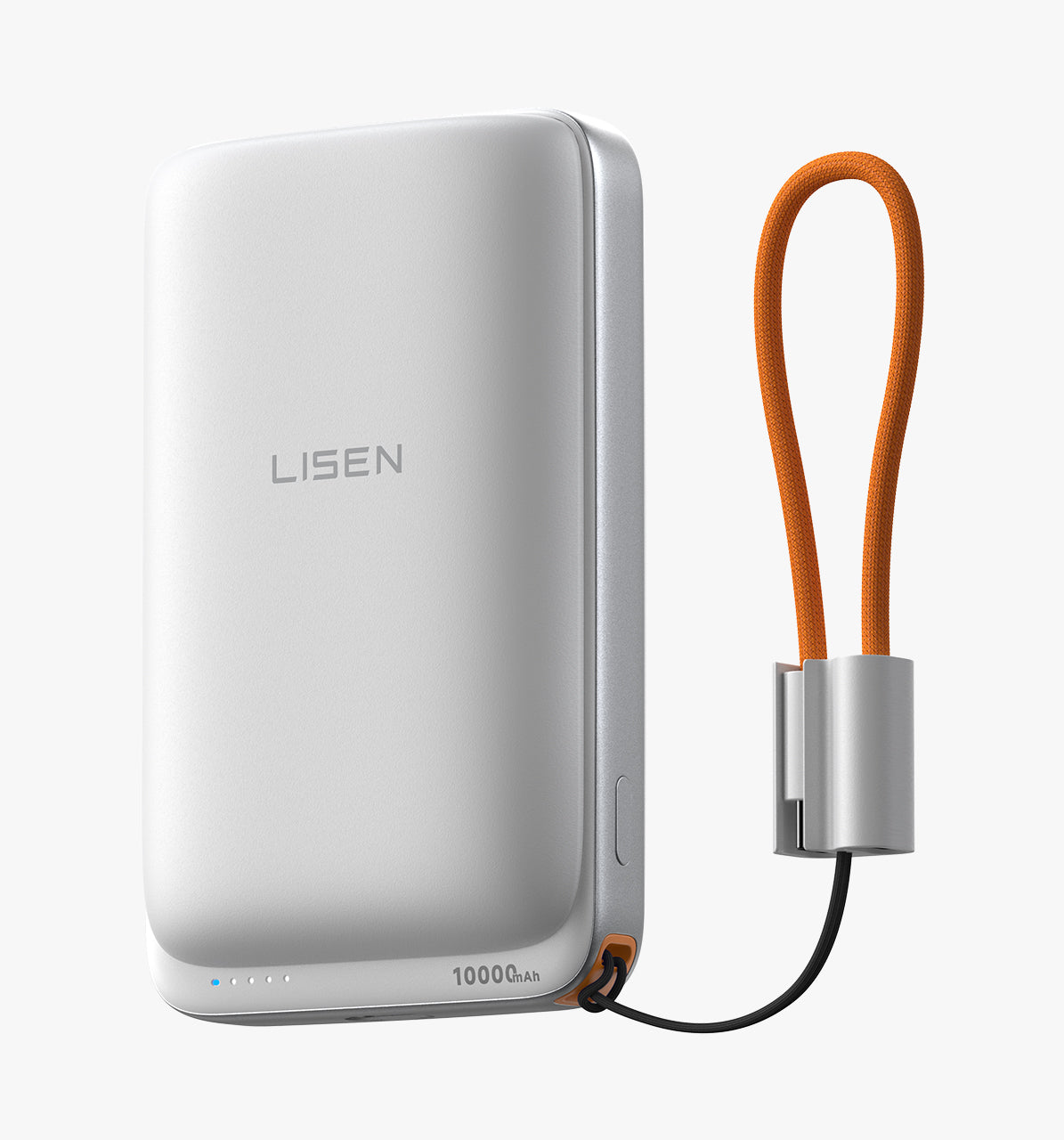
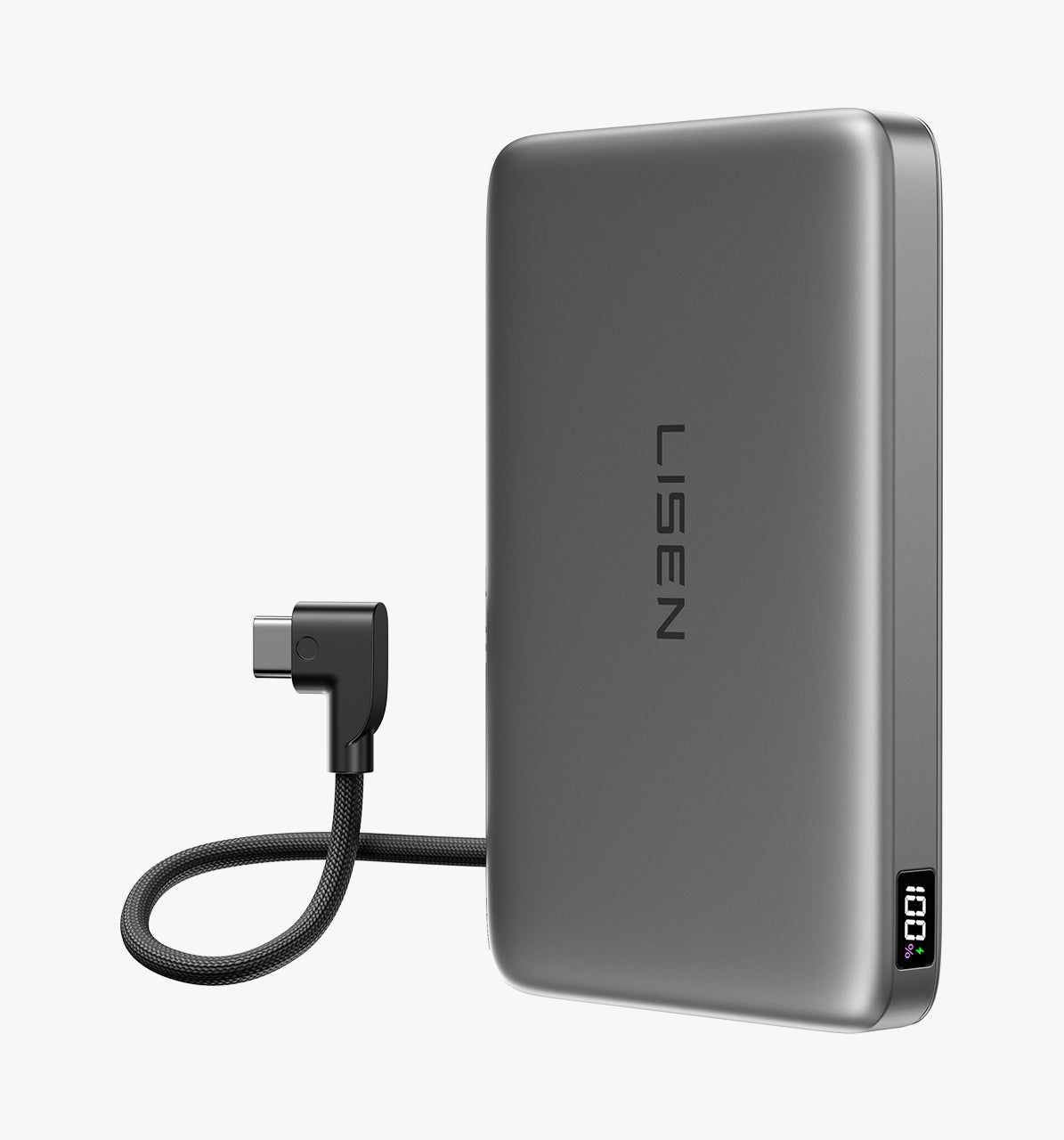
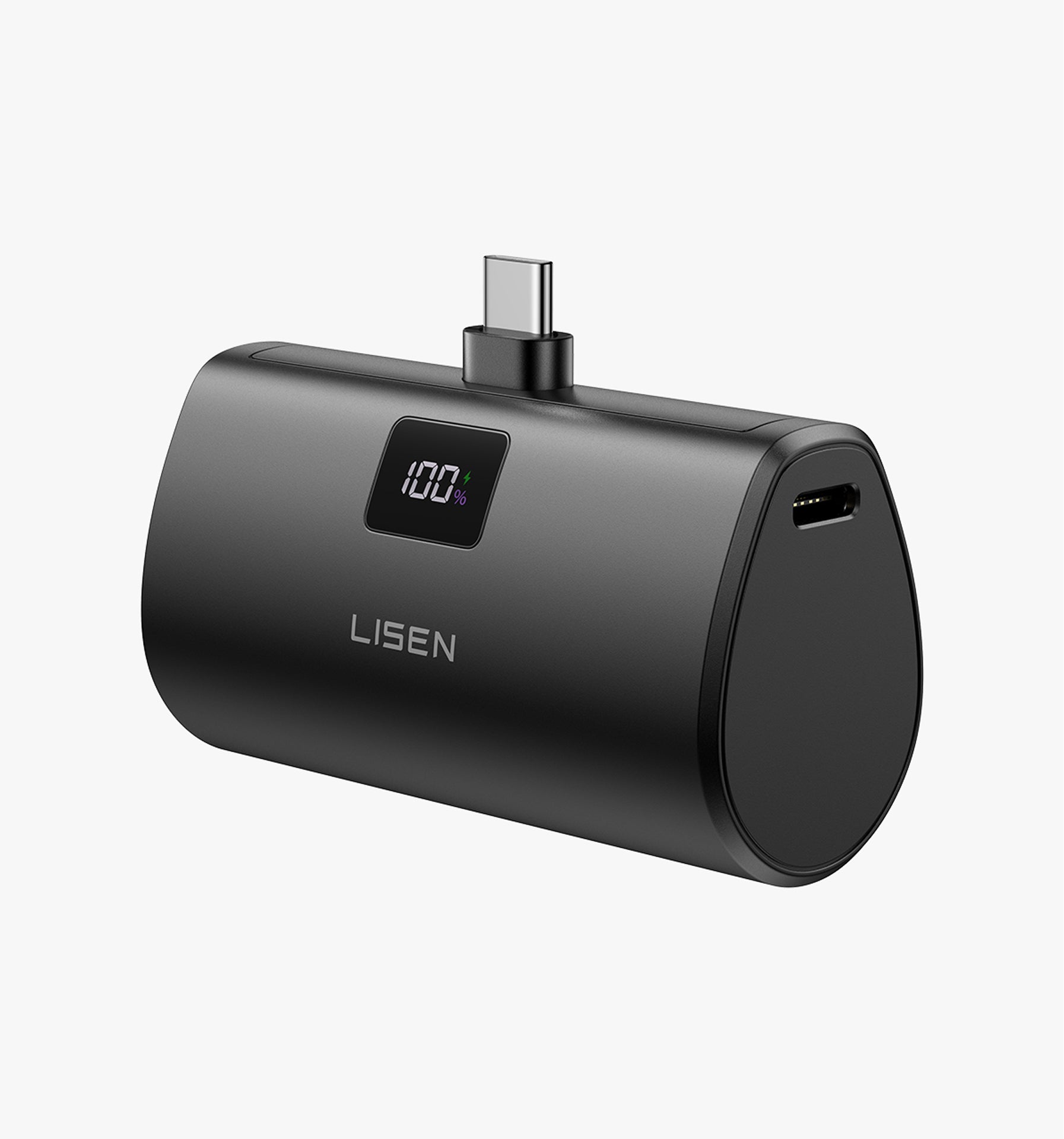
Need a little extra battery for the ride home, or more backup for a day of maps and photos? That is a useful place to start when choosing between a 5,000mAh and a 10,000mAh power bank.
This guide compares the LISEN P601 (5K) and P604 (10K) by size, weight and charging options, alongside our recorded iPhone 17 results and the iPhone 18 Pro figures on our comparison page. Start with what you need to carry, then look at how you want to charge.
Which one should you choose?
Choose P601 for a lighter daily backup. Its lower weight and slimmer profile suit a top-up between places you can plug in.
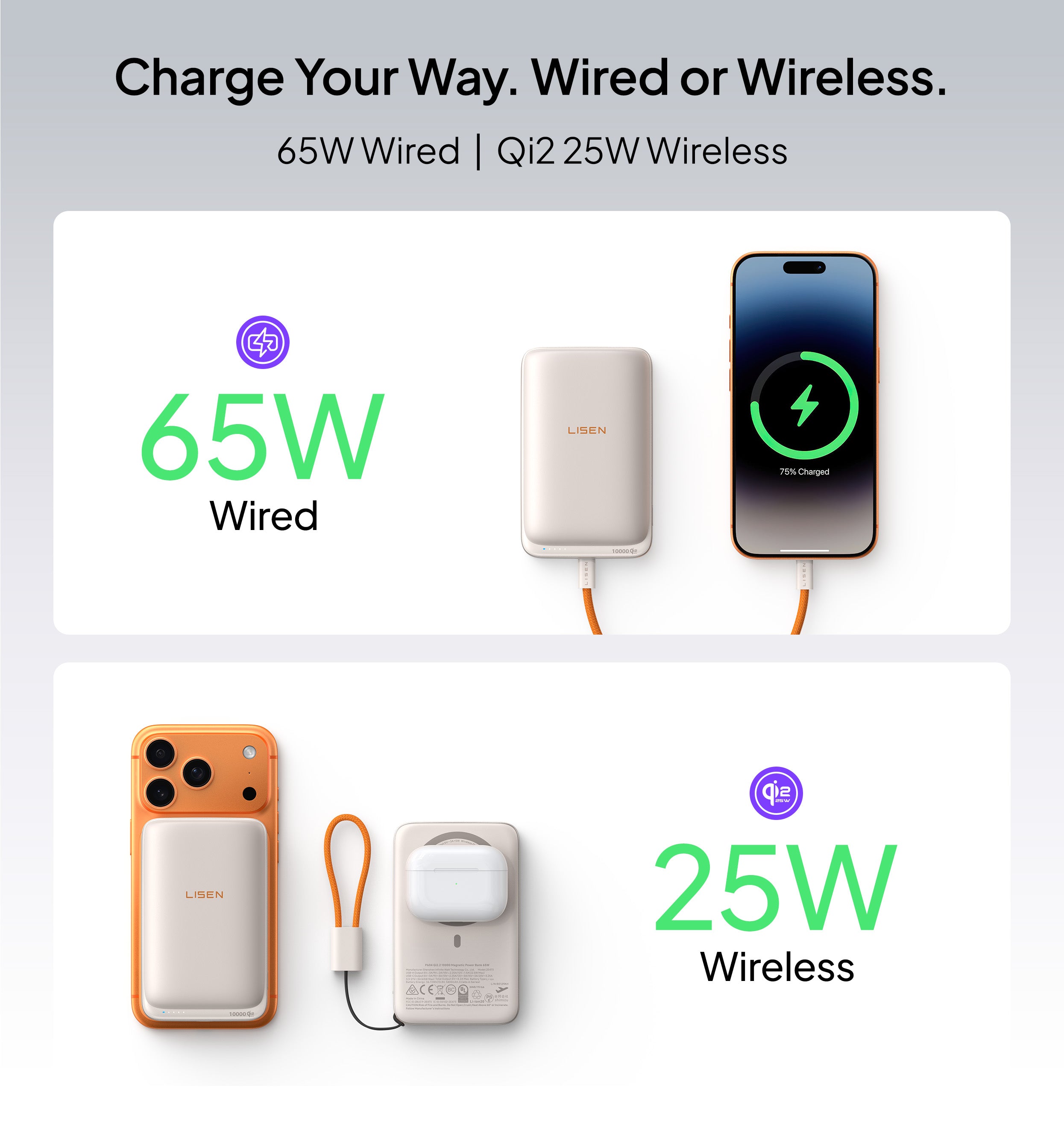
Choose P604 for more capacity and charging options. It offers higher output ratings and adds USB-A alongside USB-C. In our iPhone 17 wireless run, it also reached 80% sooner.
5K vs. 10K at a glance
| Specification | P601 · 5K | P604 · 10K |
|---|---|---|
| Rated capacity | 5,000mAh | 10,000mAh |
| Weight | 3.6 oz ≈102 g |
8.2 oz ≈232 g |
| Dimensions L × W × H |
4 × 2.8 × 0.38 in | 4.02 × 2.52 × 0.83 in |
| Max. wireless output | 15W | 25W |
| Max. USB-C output | 22.5W | 65W |
| Ports | 1 × USB-C | 1 × USB-C 1 × USB-A |
Specifications follow our iPhone power bank comparison page, checked September 30, 2026. Metric weights are approximate conversions. Output ratings are maximums; actual power depends on the device and charging conditions.
The mAh number tells you the rated capacity. The wattage tells you about charging power. More capacity does not automatically mean faster charging.
What changes when you carry it?
The clearest everyday difference is weight: P601 is 4.6 oz (about 130 g) lighter. Both packs are roughly four inches long, but P601 has the thinner listed profile. That makes it a practical starting point if you often keep the pack attached while holding your phone.
P604 puts more capacity into a thicker pack. If it usually travels in your bag and you value more backup between outlets, the extra weight may be a reasonable tradeoff. Capacity alone does not tell you which one you will prefer to carry.
How fast do they charge an iPhone?
iPhone 17: our recorded wireless results
We used the same iPhone 17 without a case, starting at a displayed 0%. The figures below are from one recorded run per product.
| Measurement | P601 · 5K | P604 · 10K |
|---|---|---|
| Battery after 30 minutes | 25% | 32% |
| Time from 0% to 80% | 118 min | 60 min |
Single-run results. Charging time varies with phone activity, temperature and battery condition.
P604 reached 80% 58 minutes sooner in these runs. At the 30-minute mark, P604 also reached a battery level 7 percentage points higher. Both measurements matter if you are deciding between a quick top-up and a longer charging session.
These products have different output ratings as well as different capacities. Apple explains that charging speed also depends on the charger, phone activity and temperature. The iPhone also reduces charging current as the battery approaches full, so the first 30 minutes will not predict the rest of the session.
iPhone 18 Pro: wireless or USB-C?
For a newer-phone example, our comparison page lists these battery levels after 30 minutes:
| Charging mode | P601 · 5K | P604 · 10K |
|---|---|---|
| Wireless | 27% | 40% |
| USB-C | 30% | 65% |
Source: LISEN comparison page. These are separate from the iPhone 17 run; the page does not specify the starting battery level.
If you use both magnetic charging and a cable, compare those options as well as capacity. A 65W USB-C rating is the power bank’s maximum output, not a promise that your iPhone will receive 65W.
A note on temperature
The iPhone 17 record lists peak readings of 37.2°C (99.0°F) for P601 and 40.3°C (104.5°F) for P604. Room temperature and measurement location were not recorded, so these readings do not establish which pack will run cooler in everyday use.
How much charge will actually reach your iPhone?
A 10,000mAh power bank has twice the rated capacity in mAh of a 5,000mAh model. That does not promise twice as many full iPhone charges. Some energy is lost during conversion and wireless transfer, and your phone uses power while it charges.
Wireless alignment matters, too. The Wireless Power Consortium explains that coil spacing and alignment affect power transfer. A capacity label alone cannot account for all of those differences.
Our recorded sessions did not measure either pack through complete depletion and repeated phone charges. They show charging speed, but do not establish how many full recharges either power bank can deliver.
Which capacity fits your day?
5K: a top-up for the trip home
Your phone is running low before the trip home, but you will be near a charger again tonight. In that situation, consider P601 as a daily backup. You may have little reason to choose the larger capacity if you rarely need much extra charge.
Its lighter build is particularly relevant if you carry it in a pocket or keep it on the phone while checking messages. Choose it when a smaller backup matches your routine.
See the P601 5,000mAh power bank →
10K: more reserve between outlets
You leave in the morning and still have maps, photos and the ride home ahead of you. Consider P604 when you want more backup capacity and are unsure when you will next plug in. Its faster recorded wireless result is another reason to consider it if charging time matters.
Its higher USB-C output rating also gives you another charging option for compatible devices. How long the extra reserve lasts depends on what you charge and how you use it.
See the P604 10,000mAh power bank →
Want to compare finishes as well? Explore the iPhone and power bank pairings.
Frequently asked questions
Is 5,000mAh enough for an iPhone?
It can be a useful top-up. In our recorded wireless run, P601 took our iPhone 17 from a displayed 0% to 80%. The remaining power-bank charge was not recorded, so this result does not establish a full-recharge count.
Can 10,000mAh charge an iPhone twice?
The capacity label alone cannot answer that. It depends on the phone, charging method and usable energy delivered. Our P604 test did not measure repeated full recharges, so we cannot confirm two charges from these results.
Will every iPhone charge at the listed wattage?
No. The output rating describes the power bank’s capability. The phone’s supported charging mode, battery level and temperature affect how much power it receives. Check compatibility for your exact iPhone model.


